Sunday, October 21, 2018

Halstead, Blog Post 14

Image result for march for science


Overview: The picture above shows Bill Nye (center, red bow-tie) leading a march in the "March for Science" movement. Without understanding the events of recent history, the appearance of movements like the March for Science,  Black Lives Matter, and the Women's March might be entirely confusing. At best, a lack of understanding of recent history might leave an average person to ignore or misunderstand the motives of various protests movements. At worst, that same lack of understanding might drive harmful conspiracy theories and foster the creation of radicalized hate groups. The screencast below elaborates on the need for establishing relevance using recent history.

Screencast: Screencast 14

Big Question: How can teachers integrate recent history when it seems like there isn't enough time?

Interactive Site: The interactive site I chose for this blog demonstrates Loewen's point about a curious refusal to touch the recent past. The site is an interactive timeline with primary sources from the World Digital Library and contains a wealth of sources that provide an overview of U.S history. However, the most recent event at the end of the timeline is the 1986 Challenger disaster despite the wealth of events that have happened in the 32 years since and the wealth of primary sources across all media to accompany them. The timeline can be found here. 

Thursday, September 27, 2018

Halstead, Blog Post 13

Image result for Meriwether lewis murder or suicide


Overview: The image above is Meriwether Lewis of the famous explorers, Lewis and Clark. His legacy as an explorer, his position in frontier history, and his relationship with Clark make for exciting history on their own, but one of the lesser known things about Lewis is the debate about whether he committed suicide, or he was murdered. This connects with chapter 8 of our text because it provides students an opportunity to ask all 3 of the major historical questions (what, why, and how) in an interesting and engaging way. I elaborate on this in the screencast below.

Screencast: Screencast 13

Big Question: How can we engage students in meaningful inquiry if they do not enjoy history?

Interactive Site: The interactive site for this blog is a "just for fun" history site dedicated to made-up journals of Lewis and Clark. In these fabricated journals, Lewis claims on several occasions to have seen bears wearing human pants. While amusing, these journal entries could also be used as an opener to historical inquiry and analyzing primary sources.

Monday, September 24, 2018

Halstead, Blog Post 12

Image result for john brown harpers ferry

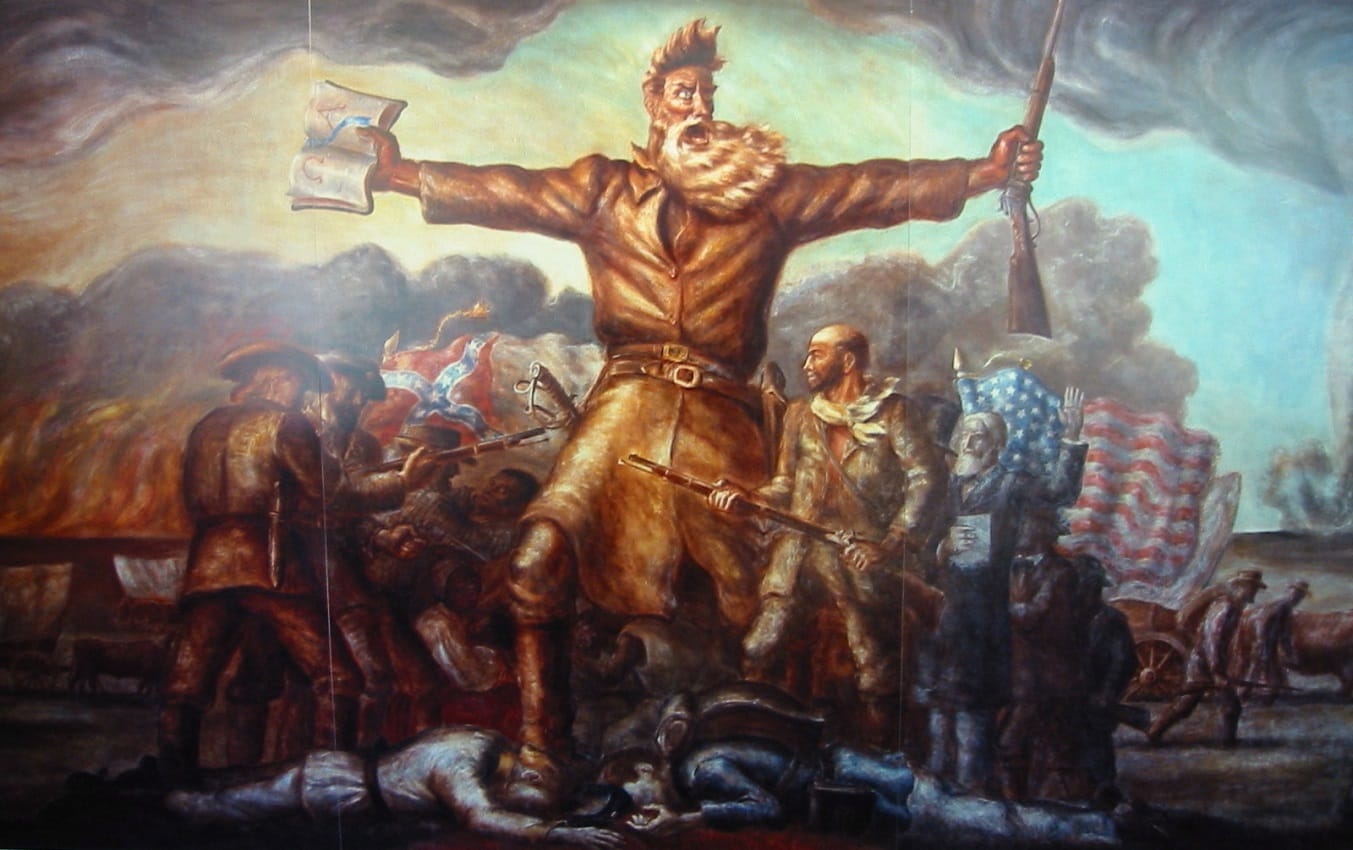
Overview: The image above is the full image that Loewen references in chapter 6 of Lies when discussing how John Brown and his raid at Harper's Ferry are often interpreted as the fanatical and doomed plot of a madman. In making his case, Loewen might have been better off to use the full image as opposed to the one cropped in on Brown's face. Here, one can see the scope of just how insane this representation of Brown is meant to make him look. He is a giant, stepping on the heads of the dead and towering over all others in the background. The image reflects nothing of Brown's calm and reflective nature prior to his execution for treason. Loewen's main argument in chapter 6 of Lies is that the erasure of big ideas from American texts (particularly racism, Loewen's pet preoccupation) does a disservice to students and to history by steering clear of any real controversy in an effort to remain as palatable as possible to everyone. 

Screencast: Screencast 12

Big Question: How can we present big ideas to students when textbooks actively undermine this process?

Interactive Website: The interactive site for this blog is an interactive map of slavery over time in the United States that can demonstrate to students the expansion of the institution as well as its status immediately prior to the civil war. This is of particular importance to Loewen's case because the density of slave population likely correlated positively with seccesionist sentiment. The map can be found here, and would be a great way to show students how and where slavery spread over time using census data.

Halstead, Blog Post 11 (Cantu Chp. 7)

Image result for goldberg machines

Overview: The image above was created by cartoonist Rube Goldberg, who pictured fantastical and overly complicated contraptions for comedic purposes in the 1930's. The concept of a "Goldberg Machine" quickly caught on in both language (taken to mean something needlessly complicated or indirect for performing a simple task) and practice (contests to build the most convoluted machines in the spirit of Goldberg's drawings exist today). As educators, we must take great pains to ensure that the technology we are introducing in the classroom is not acting as a Goldberg machine. In other words, classroom technologies should be unobtrusive, well implemented, and help improve overall learning outcomes. They should not make simple educational tasks unnecessarily complicated.

Screencast: Screencast 11

Big Question: How can teachers ensure that the technologies they are adopting are beneficial?

Interactive Site: This interactive site is a shameless self-plug to a Weebly I created for another class here at Bradley. Since the spirit of this chapter is top instructional tools for teachers, I thought it would be helpful to share some of my own. The page I linked is dedicated to tools in History/Social studies that I thought might be useful for the future. Many of the tools/sites on this page are interactive and deal with many types of media, including music.

Thursday, September 20, 2018

Halstead, Blog Post 10 (Cantu Chp. 6)

Image result for U.S citizens being sworn in


Overview: The image above shows a room full of brand new Americans being sworn in. I have the opportunity to lead a civics discussion prior to a similar event that will be taking place in the Renaissance Collesium next week. High school students who have lived in America their entire lives likely know less than all of the people in the room above when it comes to U. S government. It is our charge as teachers to prepare students to be good digital citizens so that they can be good citizens in general, as technology use and digital information transfer in the United States become ubiquitous.

Screencast: Screencast 10

Big Question: How can teachers best prepare students for digital, as well as actual, participation in U.S society?

Interactive Site: This page on the cyberwise website features a host of different interactive games teachers can use to introduce students to digital citizenship. One of the games is featured on Brain Pop, which was popular in my school when I was younger.

Halstead, Blog Post 9 (Cantu Chp. 5)

Image result for titanic approaching iceberg

Overview: At the risk of sounding dramatic, I firmly believe that the scene above represents the demographic crisis of technology in the classroom. In this scene, the H.M.S Titanic is steaming toward an iceberg that will cause the ship previously considered "unsinkable" to shatter in two. Had the captain taken more caution in dangerous waters, the people who died that night might still be alive. So here is the comparison: The Titanic is the U. S education system. The water is all the available technologies of modern society (particularly the internet and apps) and the surrounding icebergs are a full embrace of technological assimilation in the classroom. We are each the captain of our own Titanic. Technology in the classroom is just as much a fact of life as the ocean and ice in polar regions, and we must determine our approach with serious caution if we want to safely navigate ourselves and our students to the other side. I elaborate in my screencast.

Screencast: Screencast 9

Big Question: What degree of technological skepticism is healthy for an educator?  

Interactive Site: The site I chose is called Edmodo. Edmodo is a full-scale learning platform designed for high school classrooms and similar in function to administrative systems like Sakai or Blackboard. It is designed to provide students with an online workspace where they might feel more comfortable sharing (e.g blog posts) than they might in a classroom. Teachers can post assignments, reminders, and interact with students.

Thursday, September 13, 2018

Halstead, Blog Post 8

Image result for boston massacre civil warImage result for lynching photos

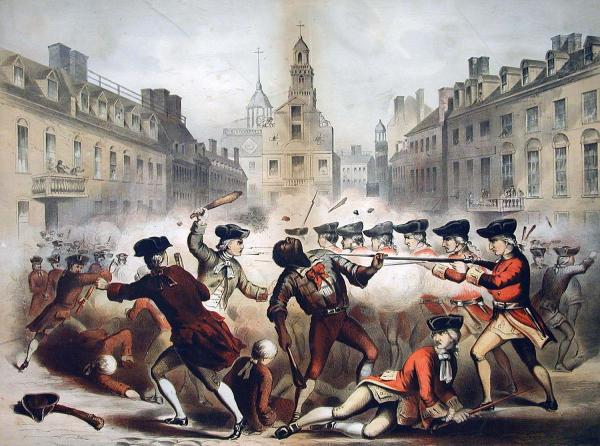
Overview: The top image is a painting that dates from the civil war era. It shows Crispus Attucks dying as one of the first casualties in the American Revolutionary War. Abolitionists of the period were attempting to paint Attucks as an American patriot. He was a runaway slave who lost his life in the first scuffle for American liberty and may stand in as a representation of the Black soldiers who died during the ensuing conflict. 


The bottom image is of a Black man being lynched over a hundred years after the Revolutionary war had drawn to a close. For all the high ideals of the Revolution, Black people in America continue to face racism and discrimination to this day. It is imperative that we address contrasts between American idealism and American realities with students, lest they believe we have achieved the ideal.


Screencast: Screencast 8

Big Question: How should we, as educators, handle issues of race and racism in the classroom?

Interactive Site: The site I chose is an incredible resource for teaching about racism in the classroom. It can be found here on the ASCD In-service website. ASCD is a multinational nonprofit dedicated to advancing education. While the page itself is not interactive, it provides links to several forms of media including videos and podcasts, as well as a number of articles.